In the summer of 1923, a twenty-one-year-old stepped off a train in Los Angeles with a cardboard suitcase, a single reel of film, and about forty dollars to his name. His first company had already gone bankrupt. Almost nobody thought he would amount to much.
His name was Walt Disney. You know how the story ends. What is easy to miss is how it happened — and why it has everything to do with the tools sitting in front of your business right now.

He bet on a new technology before anyone trusted it
By 1928, Walt had already been burned badly. A distributor quietly poached his entire animation crew and walked off with the legal rights to his first hit character. Overnight, his studio was worth almost nothing.
So he did something that looked reckless. He had just seen The Jazz Singer — the first film with synchronized sound — and he became convinced that cartoons needed sound too. Everyone else in animation was waiting to see whether sound was a passing fad. Walt bet his tiny, wounded studio on it and made Steamboat Willie, the first cartoon with fully synchronized sound. It introduced a mouse named Mickey, and it changed the entire industry.
Here is the part worth underlining. Walt did not win because he drew better than everyone else. He won because he adopted a powerful new technology early — while his competitors were still arguing about whether it mattered.
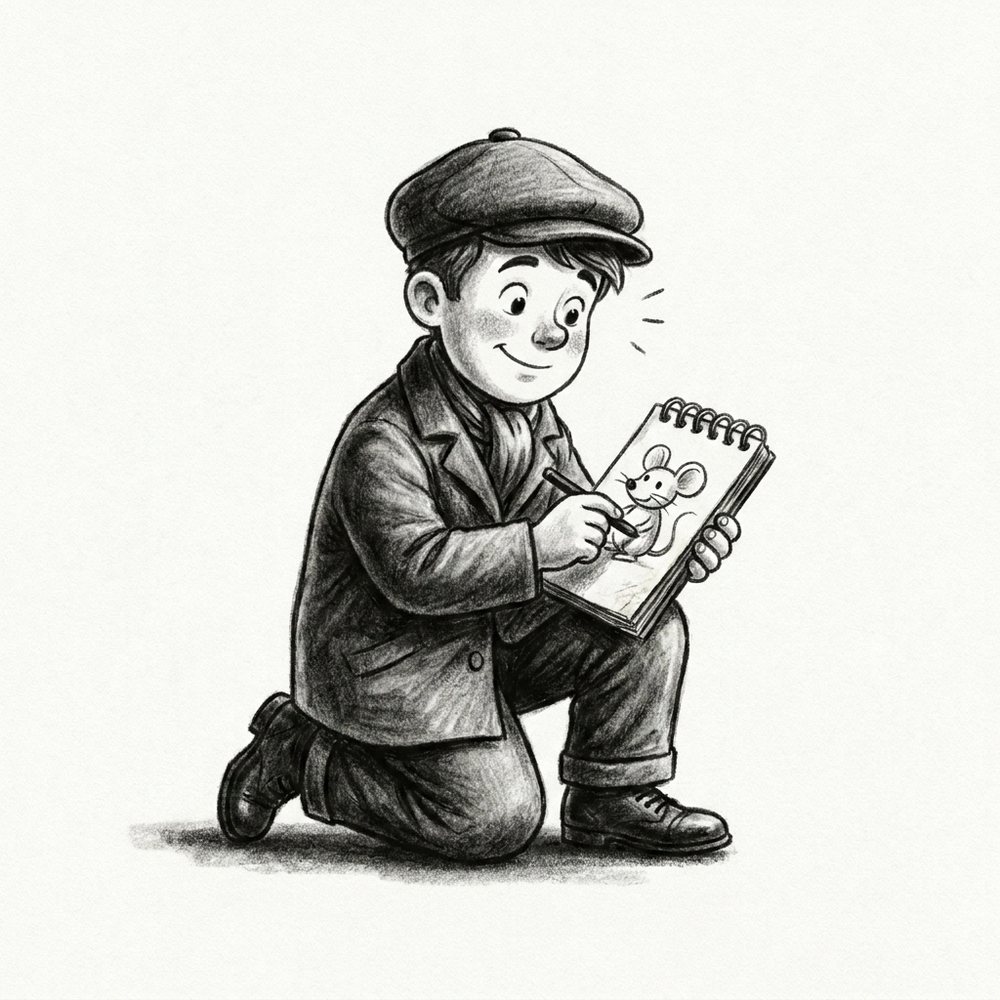
Today, that technology is AI
Synchronized sound did not replace storytelling. It gave storytellers a new way to reach people. AI is the same kind of shift. It does not replace your taste, your product, or your voice. It removes the parts that used to cost you a studio, a crew, and a month of calendar — the photo shoot you could not afford, the week of captions you never wrote, the brand look you could never quite nail.
The small business that treats AI the way Walt treated sound — as a tool to tell a better story, faster — gets the same edge he did. Not because the tool is magic, but because most of your competitors are still waiting to see whether it is a fad.
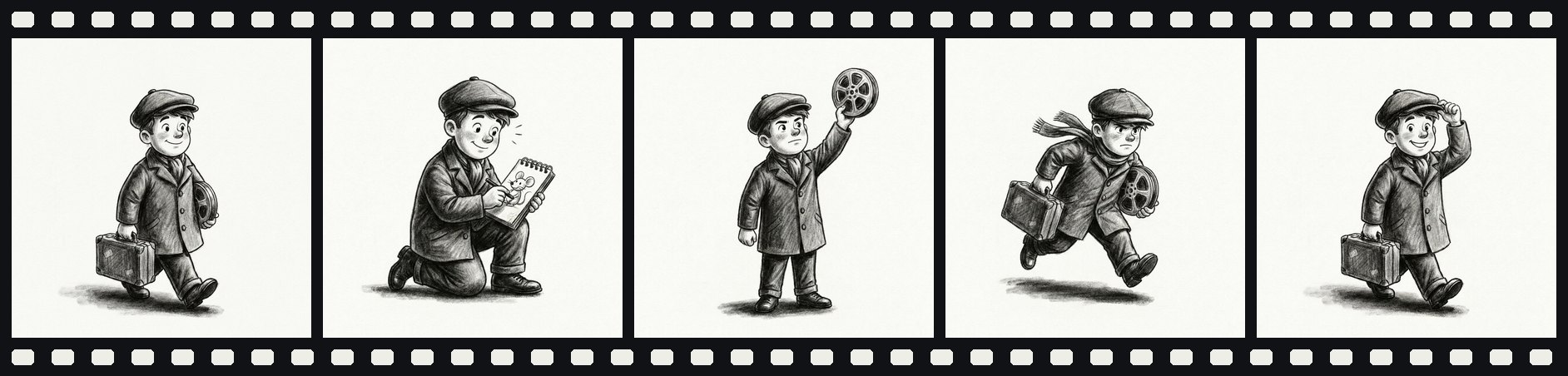
It was never about the tool. It was about the story.
Strip away the technology and Walt’s real skill was simple: he made you feel something, and he made you pay attention. That is the whole game in marketing, then and now. Marketing is not ads. Marketing is attention — and attention is story.
A logo does not sell. A price does not sell. A story people recognize themselves in sells. The founder who nearly lost it all and kept going — every small-business owner in the Valley knows that feeling in their bones. That is why a little charcoal character can stop your thumb mid-scroll. It is not slop. It is a story with a face.
He got knocked down. He kept the plan.
Snow White was mocked in the press as “Disney’s Folly.” A feature-length cartoon? Impossible, they said. The budget ballooned from $250,000 to $1.5 million, and Walt mortgaged his own house to finish it. Some of his people believed and stayed. Some left. He never changed the plan — and the film went on to earn the equivalent of well over a hundred and eighty million dollars in today’s money.
That is the part no tool can give you. AI can draw the character and write the first draft. It cannot decide to keep going when it is hard. That part is still yours.

What this means for your business
You no longer need a studio or a crew to tell your story well. You need three things: a clear story, the willingness to use the new tools, and the grit to keep showing up. Here is how we think about it at RiCreate.
- Start with the story, not the software. The tool is not the point. What do you want people to feel about your business? Answer that first, and the content almost writes itself.
- Use AI to lower the cost of showing up. The reason most small businesses go quiet online is not laziness — it is cost and time. AI turns a week of content into an afternoon, so you can actually be consistent.
- Own something original. Stock photos and generic templates make you look like everyone else. An original character, a real voice, a look that is yours — that is what people remember. No stock, no slop.
- Keep going. The founders who win are rarely the most talented. They are the ones still posting, still shipping, still showing up in month six when everyone else quit in month two.
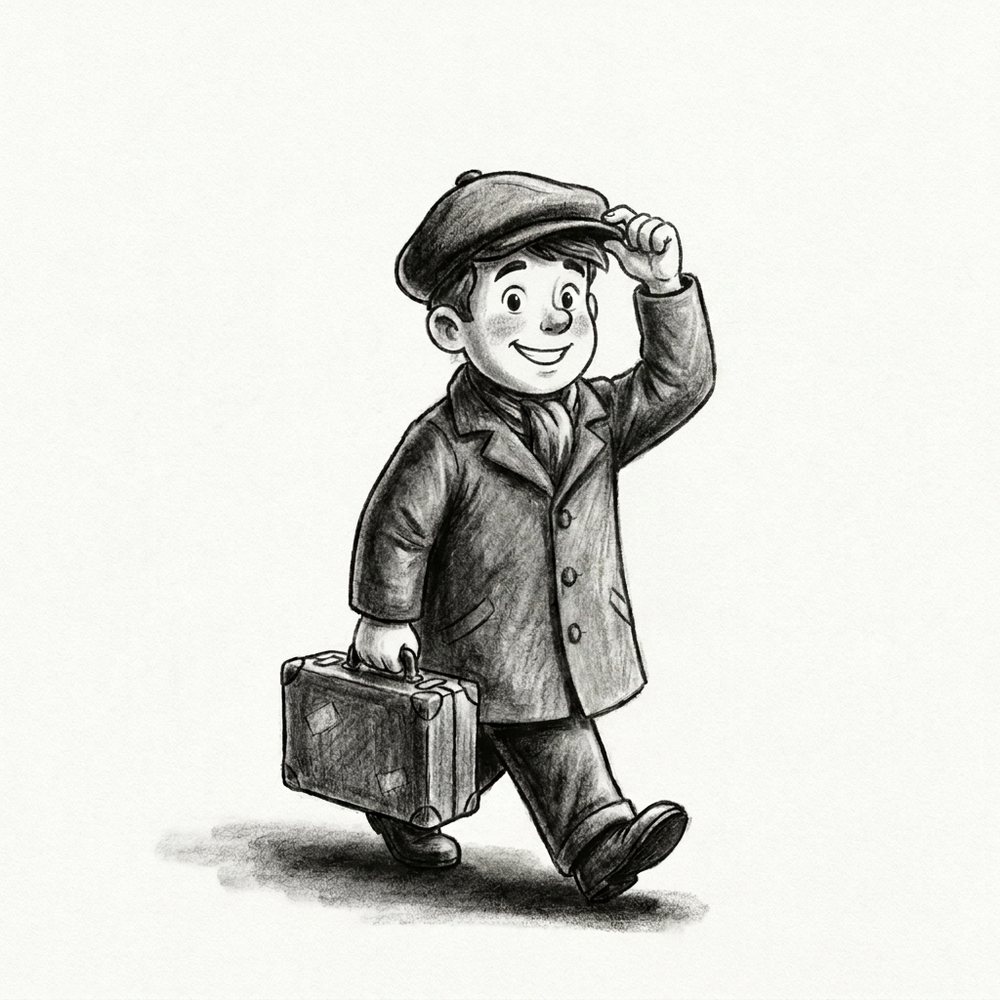
We built the character and the story in this article the same way we would build one for you — an original charcoal identity, drawn frame by frame with RiCreate Ai, sparked by the Acquired podcast’s telling of the Disney story. If it made you feel something, that was the point.
Want a story like this for your business? That is exactly what we do. Start a project →